
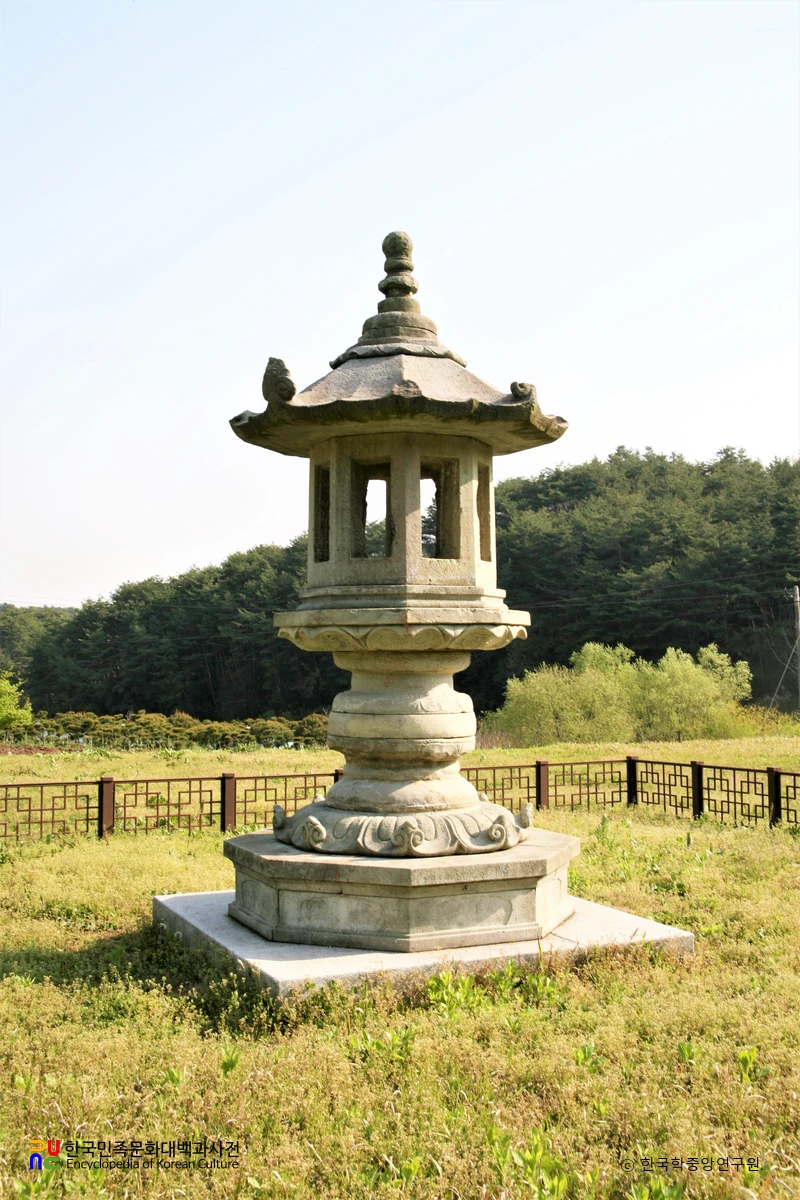
One lantern, two moments in history
At the former Gaeseonsa temple site in Damyang stands a stone lantern from the Unified Silla period. About 3.5 metres tall and designated a national Treasure in 1963, it rewards a close look at its octagonal light chamber, lotus-carved supports and roof stone.
868: royal patronage
The Encyclopedia of Korean Culture explains that an inscription dated 868 records the wishes of King Gyeongmun, Queen Munui and the eldest princess, along with the monk Yeongpan's role in constructing the lantern. The record points to royal connections, although the temple's precise foundation date is not established.
891: paying to keep the light burning
A second inscription, dated 891, concerns the monk Ipun and a purchase of farmland using 100 seok of grain, interpreted as providing for the lantern's maintenance. The wording offers a rare glimpse of economic life as well as religious devotion. Some details of the land transaction remain scholarly interpretations.
Looking closely
Look for the eight-sided openings, the lotus patterns and the stone roof. The inscription, rather than the landscape alone, is what makes this lantern especially revealing. Remember that 891 is a later inscription, not the date the lantern was first erected.
Before visiting
The heritage entry locates the site at 593-2 Hakseon-ri, Gasamunhak-myeon, Damyang-gun. Older documents may call the area Nam-myeon. Current access hours, parking and the best route to the object were not verified. Check locally before travelling.